The November 2026 Digital Marketing Roundup highlights a transformative period in the industry, driven primarily by the rapid advancement and integration of artificial intelligence (AI). This shift is characterized by evolving search behaviors, increased platform control, and a new paradigm where digital visibility is less about content volume and more about establishing trust across the entire digital ecosystem. Key developments include AI summaries in Google Discover, the release of ChatGPT’s browser, TikTok’s enhanced attribution, Meta’s refined ad placements, Google’s guardrails for AI-written ads, changes in how social platforms utilize data for AI training, the pervasive dominance of streaming, and the elevated strategic role of schema markup.
Key Takeaways
The major shifts observed in November 2026 can be summarized by five core insights:
- AI is actively redefining the user click path, with Google Discover summaries and AI Overviews leading to a reduction in click-through rates (CTRs) across various content categories.
- The influence of cross-channel marketing is becoming increasingly quantifiable, as TikTok’s attribution insights reveal a significant amount of value often missed by standard reporting methodologies.
- Digital visibility is now contingent upon a brand’s authority across multiple ecosystems, extending beyond its owned website, particularly because large language models (LLMs) frequently draw information from platforms that brands may traditionally overlook.
- Platforms are reinforcing their control over data and its usage, indicating a future with more stringent compliance mandates for advertising and content practices.
- Structured data has transitioned from being merely an “SEO extra” to a fundamental component of infrastructure essential for AI-driven search mechanisms.
Search & AI Evolution
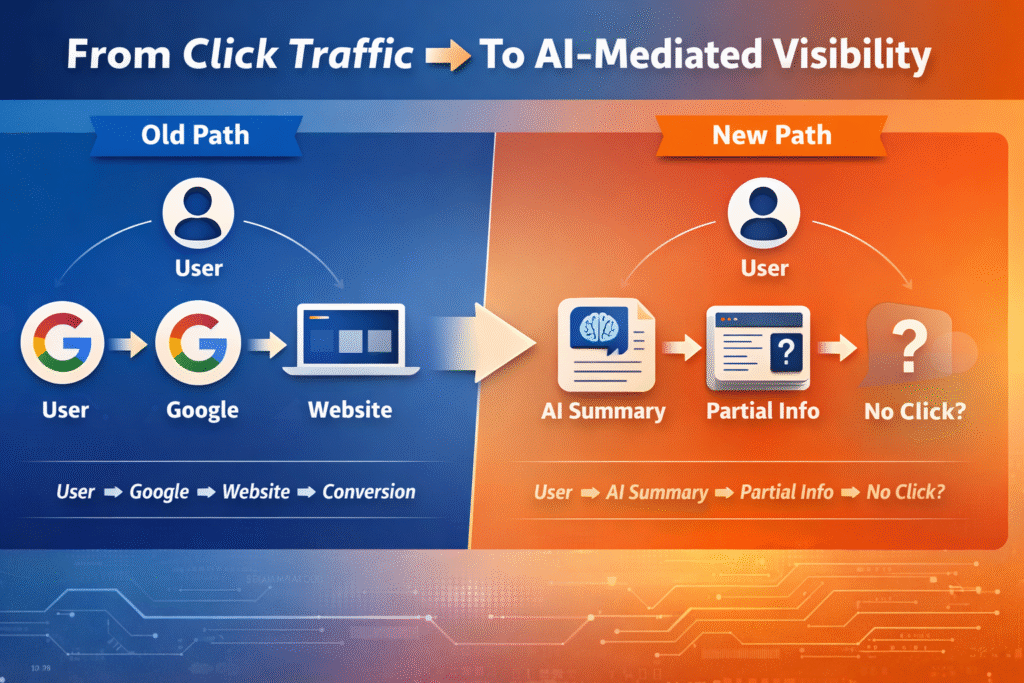
The landscape of search is being reshaped by AI, which now influences what users perceive even before engaging with content, often obviating the need for a click entirely.
AI Summaries Hit Google Discover
Google has integrated AI-generated recaps into Discover, specifically for news and sports narratives. This development provides users with immediate context from these summaries, thereby reducing the necessity to navigate to the original publisher’s website.
- Our POV: Google Discover, previously a significant driver of high-intent traffic, is now fully impacted by AI. This change is expected to lead to a surge in zero-click content consumption.
- What to do next: Marketers should actively monitor Discover CTR within their analytics platforms. It is crucial to refresh headline structures and imagery to effectively compete with AI-generated summaries. Furthermore, content distribution strategies should be diversified beyond traditional articles to encompass formats surfaced by Discover, such as YouTube videos and posts from platforms like X.
ChatGPT Releases an AI-Powered Browser (ChatGPT Atlas)
OpenAI launched ChatGPT Atlas, a browser featuring integrated summarization capabilities, product comparison tools, agent actions, and persistent memory settings.
- Our POV: The primary concern is not the browser technology itself, but rather the fundamental shift in user behavior it signifies. Users will increasingly anticipate AI to interpret web pages for them, moving beyond mere display functions.
- What to do next: It is imperative to fortify structured data implementation. A thorough audit of category and product pages is recommended to ensure clarity. Brands should also commence monitoring their visibility within AI-driven search environments using specialized LLM-aware tools.
AI Overviews Drive a Drop in Search CTRs
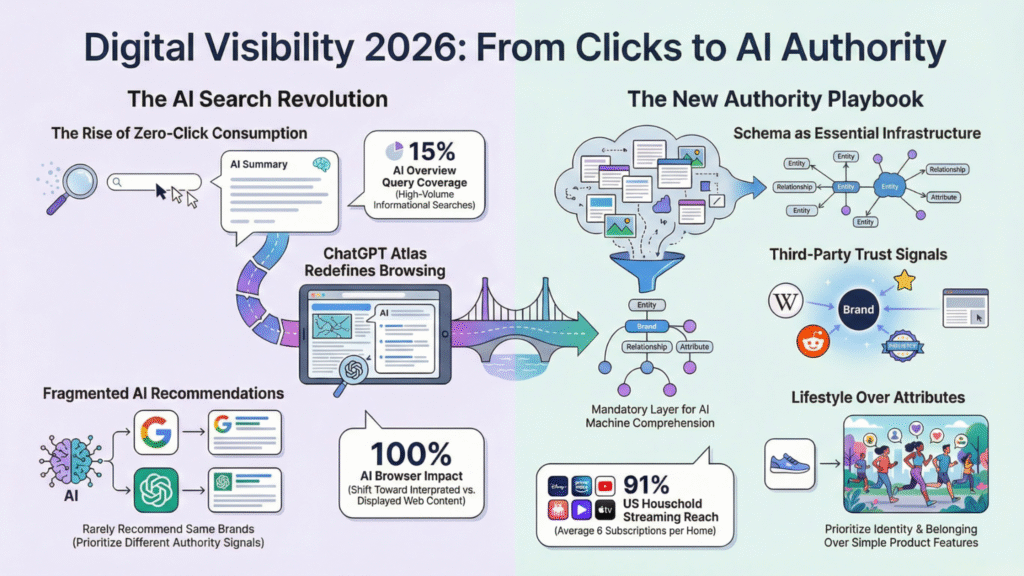
Recent research indicates a sharp decline in both organic and paid clicks when AI Overviews are presented in search results. These overviews currently activate for approximately 15% of queries, predominantly targeting high-volume informational searches.
- Our POV: AI Overviews effectively operate as a direct competitor. If a brand’s content is not assimilated into these summaries, its discoverability becomes considerably more challenging.
- What to do next: Strategies must prioritize optimization for inclusion within AI Overviews. This involves the diligent use of schema markup, the creation of succinct summaries, and the cultivation of expert signals. Tracking performance should extend beyond traditional rankings to include visibility within AI answers, establishing this as a key performance indicator (KPI) trackable through specialized tools like Profound.
Schema’s New Role in AI-Driven Discovery
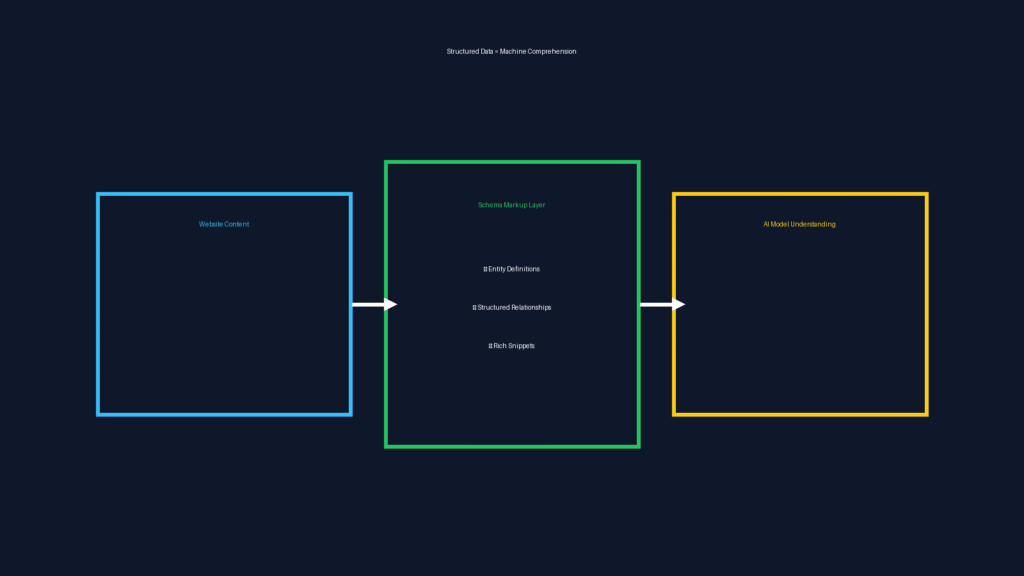
Schema markup has evolved from being merely a tool for enhancing snippets to a fundamental layer for machine comprehension. The W3C’s NLWeb group is actively working towards standardizing how AI agents interpret and consume web content.
- Our POV: Schema is now essential infrastructure. AI agents require structured contextual data to accurately interpret brands, products, and areas of expertise.
- What to do next: It is crucial to expand schema implementation across the entire website. Priority should be given to defining entities comprehensively, rather than solely focusing on rich result templates. Brands should also establish relationships between key content pieces to facilitate machines in mapping authority.
Paid Media & Automation

Advertising platforms are increasingly incorporating automation into ad delivery, shifting the locus of control from granular settings to overarching strategic planning.
Google Adds Waze to PMax
Google’s Performance Max (PMax) campaigns now possess the capability to serve location-targeted advertisements within the Waze application, specifically for campaigns centered on driving store traffic.
- Our POV: This integration significantly extends real-world intent targeting, positioning Waze as a quantifiable lever for increasing foot traffic for brands with multiple physical locations.
- What to do next: Multi-location brands should audit their store listings and geo-extensions for accuracy and completeness. It is important to monitor any shifts in budget allocation once Waze impressions commence and to validate whether observed increases in foot traffic adequately justify the expanded proximity targeting efforts.
Asset-Level Display Reporting Rolls Out
Google Ads has introduced per-asset reporting for Display campaigns, enabling marketers to individually assess the performance of images, headlines, and ad copy.
- Our POV: While this enhanced visibility aids in refining creative assets, it represents only a partial view of performance. Factors such as placement, bid strategy, and audience targeting continue to be primary determinants of overall campaign effectiveness.
- What to do next: Prior to the full rollout to accounts, advertisers should organize their assets using consistent naming conventions. Data-driven insights should then be leveraged to retire underperforming creative elements and rigorously test new variants.
Meta Introduces Limited-Spend Placements
Meta now permits advertisers to allocate a maximum of five percent of their budget towards excluded placements, provided that Meta’s prediction models anticipate a potential upside in performance from these placements.
- Our POV: This feature establishes a strategic middle ground between strictly enforced exclusions and the full automation offered by Advantage+ campaigns. It serves to mitigate risk while preserving the opportunity for potentially high-efficiency campaign wins.
- What to do next: Advertisers are advised to A/B test manual placement configurations against setups utilizing limited-spend placements. The evaluation of performance should prioritize cost per result and incremental conversions, rather than solely focusing on pure cost per mille (CPM) efficiency.
Social & Content Trends
Brands are being compelled to adopt novel storytelling approaches, influenced by identity, utility, and AI-assisted user behaviors.
Lifestyle Branding Gains Momentum
Consumers are increasingly attracted to brands that align with their personal identity and aspirations. The pursuit of affordable luxury and the signaling of status are significant drivers of engagement.
- Our POV: Product features alone are insufficient to motivate consumers; instead, feelings of identity and belonging are the primary movers. If marketing copy is exclusively focused on product attributes, brands are missing opportunities for greater impact.
- What to do next: It is essential to reframe product messaging to illustrate how offerings integrate into a buyer’s desired lifestyle. Call-to-actions (CTAs), social media captions, and headlines should be updated to evoke a sense of identity.
LLM-Briefed CTAs Redefine Engagement
CXL conducted experiments with CTAs that incorporated a pre-formulated prompt designed for ChatGPT. This approach led to improved engagement, attributed to users receiving higher-quality outputs from the AI.
- Our POV: As users increasingly rely on AI to interpret brand content, the ability to shape the initial question posed to the AI becomes a crucial element of conversion optimization.
- What to do next: Marketers should experiment with prompt-style CTAs within guides, templates, and digital tools. Testing various phrasing options is recommended to identify what generates the most accurate and valuable AI interpretations.
Influencer Partners Expand Beyond Typical Creators
Brands are diversifying their influencer marketing efforts by engaging unconventional creators, including niche experts, unique personalities, and micro-communities.
- Our POV: With the saturation of traditional influencer pools, originality has emerged as a significant differentiator.
- What to do next: Brands should proactively identify unexpected storytellers that their competitors may be overlooking. Priority should be given to individuals with distinctive voices and strong community trust, rather than solely focusing on polished aesthetics.
PR, Reputation & Brand Risk
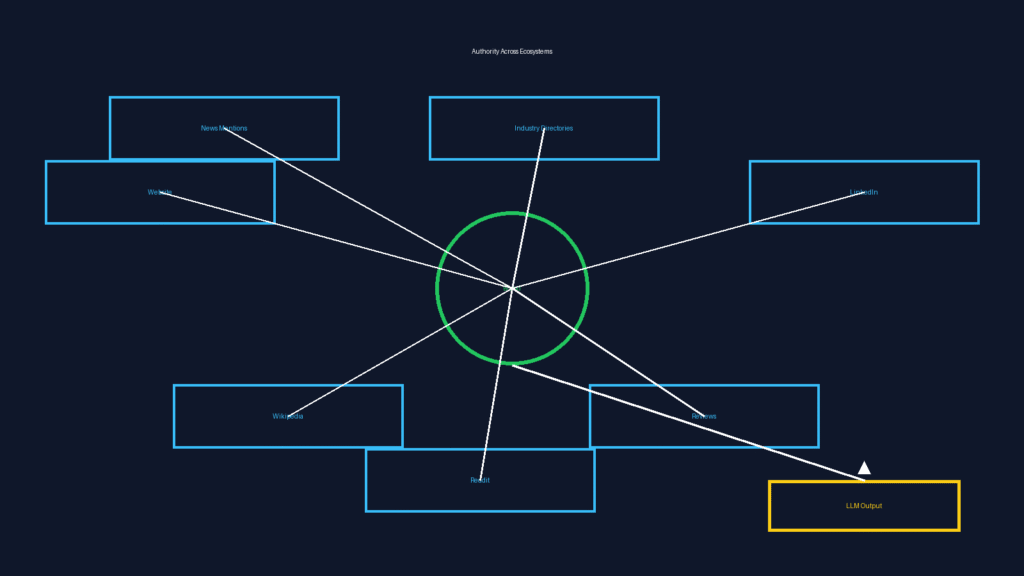
November saw significant discussions and actions regarding data control, AI training methodologies, and brand representation, establishing these as critical areas of focus.
Reddit Files Legal Action Over AI Scraping
Reddit has initiated legal proceedings against four companies, alleging they illegally scraped Reddit content via Google search results rather than utilizing its authorized paid API.
- Our POV: Given Reddit’s role as a major data source for training LLMs, this legal pressure is anticipated to significantly influence how AI models gain access to user-generated content in the future.
- What to do next: Brands should actively monitor how their brand is portrayed within Reddit threads. Insights derived from these conversations frequently, albeit indirectly, influence the outputs generated by AI.
LinkedIn Will Use Member Data to Train AI
LinkedIn has updated its user policy, asserting its right to use member profile content and posts for training its in-house AI models, unless individual users explicitly opt out.
- Our POV: This policy change raises important questions concerning transparency and could have implications for brand safety, particularly for professional voices and content.
- What to do next: Organizations should review the account settings of their employees. It is also advisable to update internal governance policies to clearly articulate how team-generated content may be reused by platforms.
ChatGPT Reduces Brand Mentions
ChatGPT has demonstrated a reduction in brand references per response, while simultaneously increasing its reliance on and elevation of trusted entities such as Wikipedia and Reddit.
- Our POV: The basis of authority is shifting towards third-party validation, moving away from sole reliance on a brand’s owned site. If a brand lacks presence on these high-trust platforms, AI tools are less likely to consistently surface its information.
- What to do next: Brands must reinforce their presence on platforms like Wikipedia, relevant industry directories, and review platforms. It is crucial to actively build citations that AI models are designed to depend upon.
AI Search Tools Mention Different Brands for the Same Queries
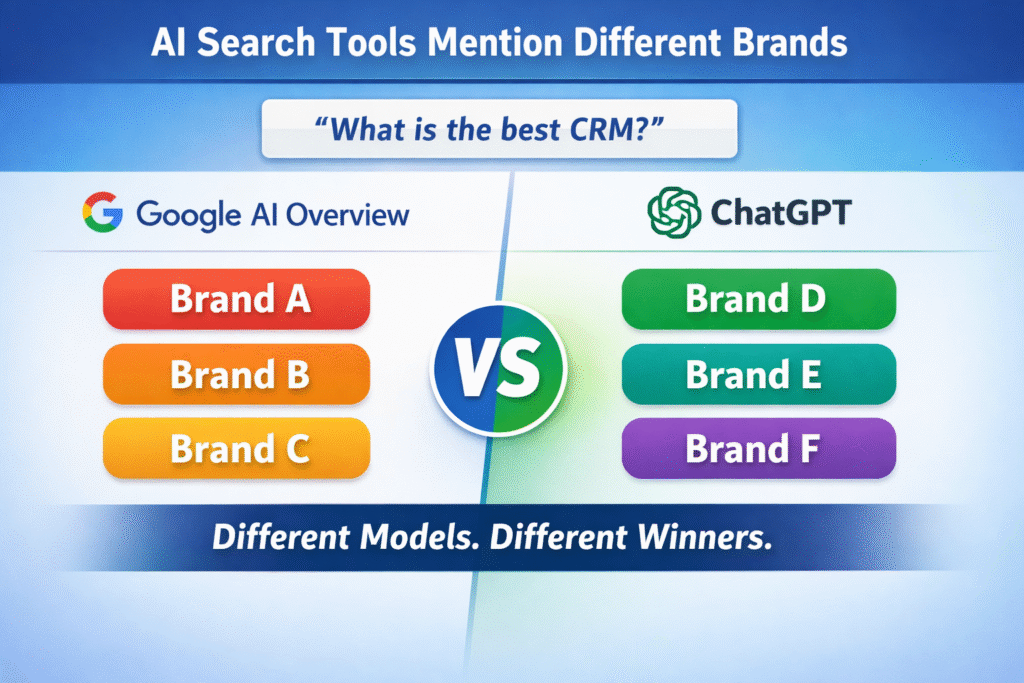
BrightEdge’s research revealed an almost complete lack of overlap between the brands recommended by Google’s AI Overview and those suggested by ChatGPT for identical search queries.
- Our POV: This disparity indicates that each AI model prioritizes distinct signals based on its specific training data. Consequently, achieving a high ranking or visibility in one AI environment does not guarantee comparable visibility in another.
- What to do next: Digital PR initiatives should be broadened beyond traditional search-focused efforts. Brands must actively build authority within the specific sources favored by each respective LLM.
Streaming & Media Shifts
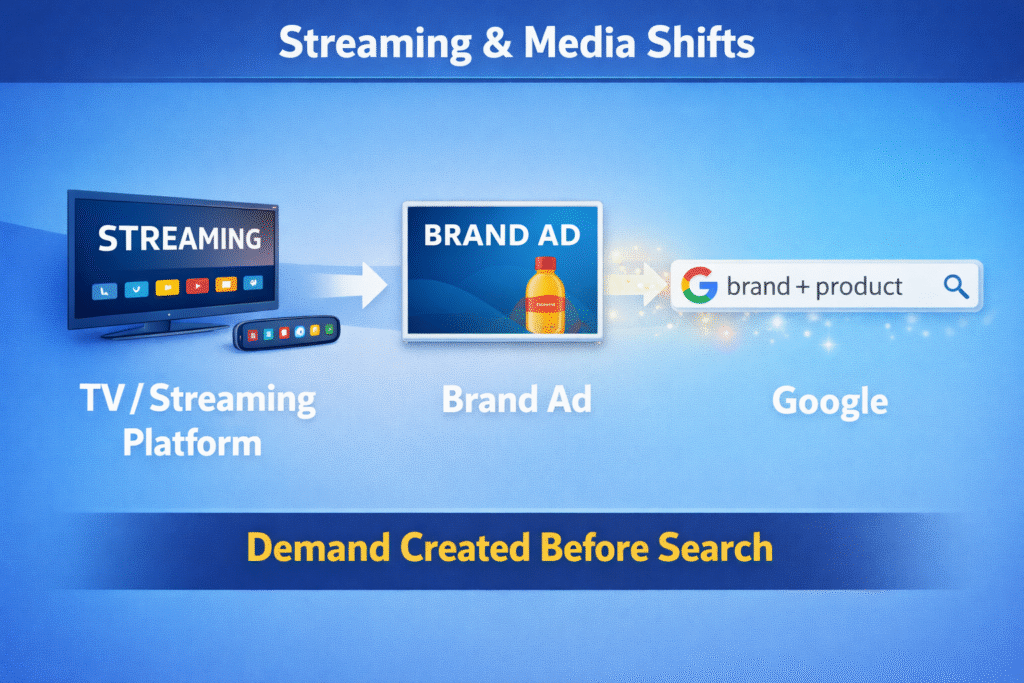
Streaming Hits Ninety-One Percent of U.S. Households
In the United States, streaming services are now accessed by 91% of households. On average, homes maintain six streaming subscriptions and spend over one hundred dollars per month on these services.
- Our POV: Streaming has solidified its position as a core channel, critically influencing user intent long before any search activities commence.
- What to do next: Brands should integrate Over-the-Top (OTT) advertising into their awareness campaigns. This strategy can be utilized to cultivate and influence demand among consumers before they engage with paid search or social media advertisements.
Conclusion
November’s developments highlight that AI is pushing every digital channel towards increased automation, a heavier reliance on structured data, and more stringent expectations regarding authority and credibility. Success in this evolving landscape is predicated on achieving clarity, establishing unwavering credibility, and maintaining a robust presence across all platforms that contribute to the training and information of AI, rather than exclusively focusing on traditional search engines. Brands that proactively adapt their data management, content creation, and distribution strategies will secure and sustain their visibility as fundamental user behaviors continue to transform.