Tracking & Measuring Success of PPC Campaigns
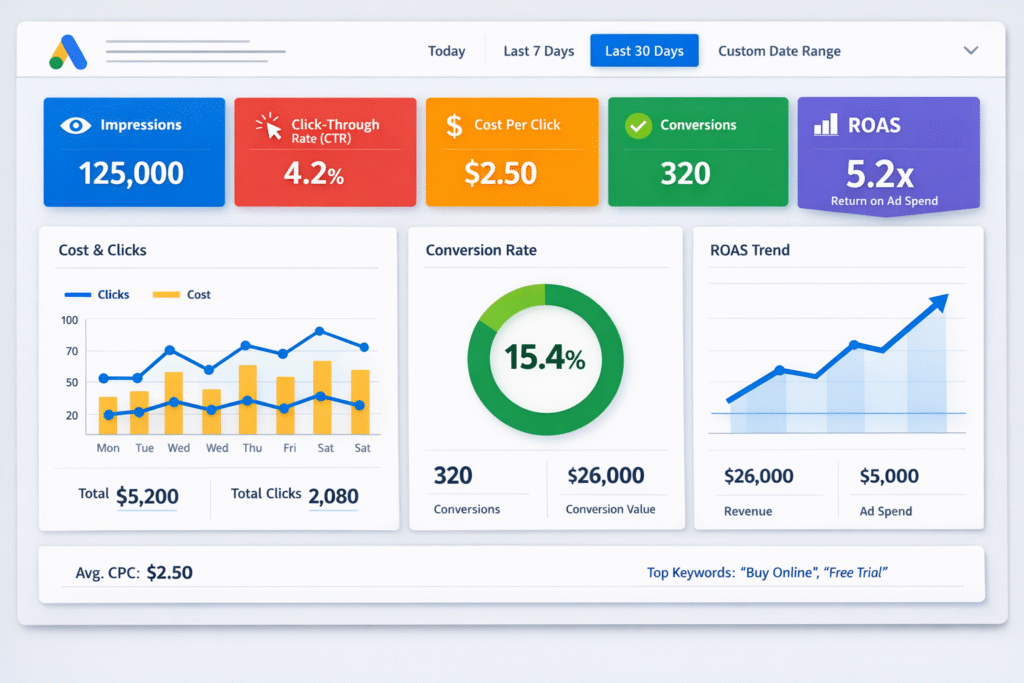
Pay-per-click (PPC) campaigns are powerful instruments for driving traffic, generating leads, and boosting sales. However, the distinction between a merely “good” campaign and a “great” one lies in the precision and effectiveness of its tracking mechanisms. Without proper tracking, marketing efforts are reduced to guesswork, leading to wasted ad spend on underperforming elements and missed opportunities to scale successful initiatives. The objective is to ensure that every dollar invested in PPC delivers optimal returns, necessitating a clear understanding of which ads are converting, which keywords are performing, and where strategic adjustments are required. This article provides a comprehensive guide to the key metrics, tools, and strategies essential for transforming PPC campaigns into robust ROI-generating machines.
Key Takeaways
- Understanding Performance: Effective PPC campaign tracking enables marketers to discern precisely which ads and keywords are yielding conversions, thereby facilitating optimized ad spend and maximized ROI. Without this, campaigns operate without clear direction.
- Conversion Focus: It is imperative to track all relevant conversions, including purchases, leads, or sign-ups, to gain a precise understanding of how ad expenditures translate into tangible results.
- Advanced Tracking Tools: Leveraging Google Analytics 4 (GA4) and Universal Event Tracking (UET) is essential for monitoring user behavior across diverse devices and platforms, yielding valuable audience insights for campaign optimization.
- Valuing Conversions: Assigning a monetary value to every conversion, including non-revenue-generating actions like lead form submissions or content downloads, is crucial for accurate ROI measurement. For instance, if a lead has an average lifetime value of $500, and a closing rate implies each lead is worth $50, this value provides clarity for ROI calculations.
- Strategic Attribution: The selection of an appropriate attribution model is vital. Options include Last Click for immediate decision-making, First Click for brand awareness objectives, Linear for a balanced view, Time Decay for extended sales cycles, and Position-Based for e-commerce, which balances prospecting and closing efforts.
- Continuous Auditing: Regular audits of the tracking setup are indispensable to prevent data discrepancies or errors. Accurate tracking forms the foundational pillar for making intelligent, profitable marketing decisions.
What Is PPC Tracking?
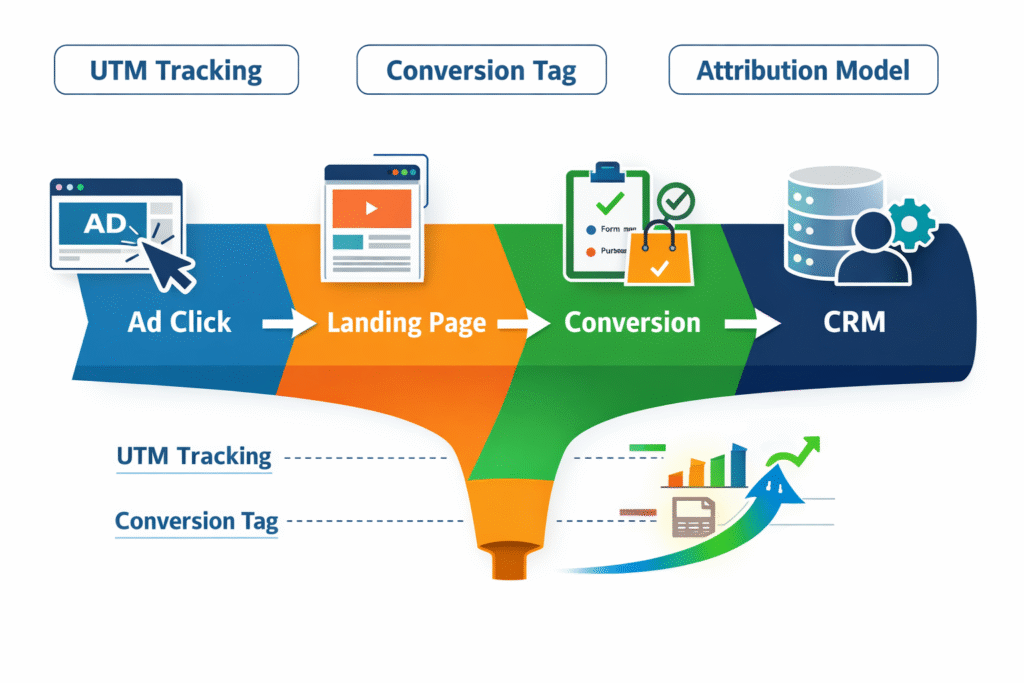
PPC tracking is defined as the systematic process of collecting and analyzing data to evaluate the performance of advertising campaigns. This process provides a granular view of the effectiveness of individual ads, keywords, and placements, distinguishing those that drive results from those that do not. Its core purpose is to quantify the return on every dollar spent, identifying where ad spend generates value and where it is inefficiently allocated.
To achieve effective PPC tracking, several foundational elements are necessary:
- Set Clear Success Metrics: Businesses must clearly define the metrics that are most pertinent to their specific goals. For e-commerce, a primary focus should be Return on Ad Spend (ROAS). For lead generation models, tracking the Cost Per Qualified Lead (CPQL) is paramount.
- Technical Setup: Accurate tracking fundamentally relies on the proper implementation of UTM parameters, conversion tracking codes, and precise goal configurations within analytics platforms like Google Analytics.
- Daily Performance Checks: Regular, ideally daily, monitoring of trends in ad spend, conversion rates, and Click-Through Rates (CTR) is critical. Early identification of unusual patterns can prevent minor issues from escalating into significant financial losses.
- Smart Optimization: Data-driven decisions are key to success. This involves strategically increasing investment in high-performing ads, making necessary adjustments to underperforming keywords, and pausing or eliminating campaigns that deplete the budget without adequate returns.
PPC platforms are in a constant state of evolution. Continuous tracking allows marketers to adapt swiftly to these changes, maintain a competitive edge, and ensure ongoing campaign profitability.
What Can You Measure? Essential Metrics and Types of Conversions
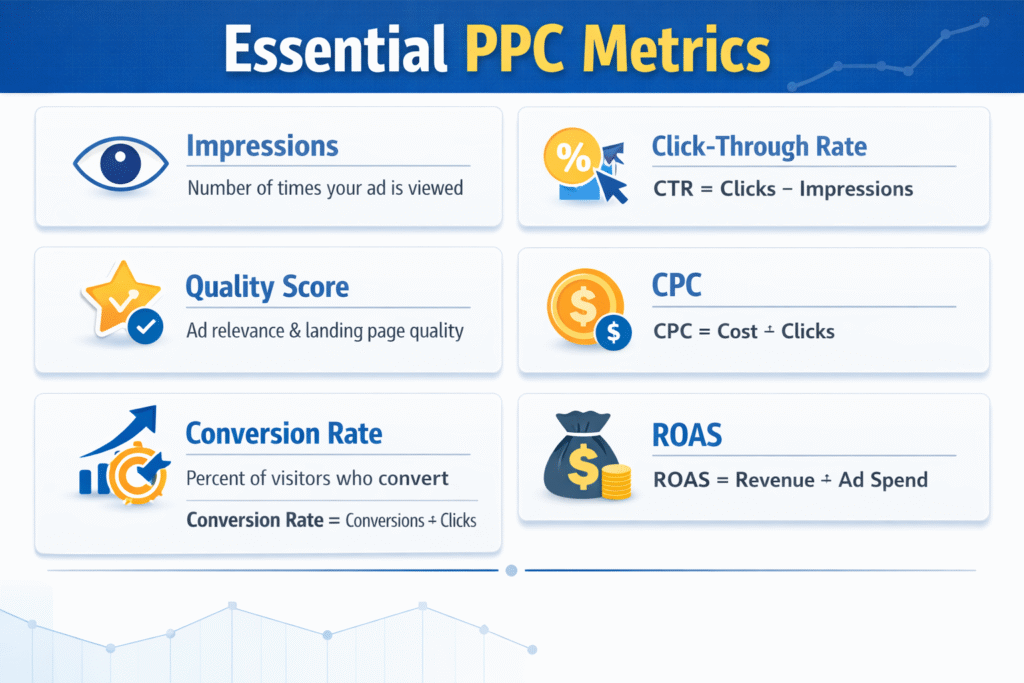
Effective PPC tracking necessitates a focus on key metrics that clearly indicate ad performance. This data is instrumental in refining strategies and implementing improvements aligned with specific business objectives.
Essential Metrics (Source: Gartner)
The following metrics are crucial for daily monitoring of PPC campaigns:
- Impressions: This metric quantifies an ad’s visibility. For most industries, the aim should be consistent week-over-week growth. A sudden decline may signal increased competition or audience saturation. A daily minimum of 1,000 impressions per campaign is a general guideline for smaller budgets, with scaling as appropriate.
- Click-Through Rate (CTR): A CTR exceeding 2% is a benchmark. Lower rates suggest potential issues with ad copy or targeting. In highly competitive niches, a CTR of 3% or higher is desirable, particularly for branded terms.
- Quality Score: Google’s proprietary 1-10 rating directly influences Cost Per Click (CPC). A target Quality Score of 7 or higher is recommended, as each additional point can reduce CPC by up to 16%, leading to significant long-term cost savings.
- Cost Per Click (CPC): This metric should be evaluated against the target Cost Per Acquisition (CPA). For example, a $5 CPC necessitates a minimum conversion value of $50 if the average conversion rate is 10%. Maintaining a CPC below $3 for broader campaigns is a general guideline, with adjustments based on keyword profitability.
- Conversion Rate: Industry benchmarks vary, but aiming for at least 3% for e-commerce and 10% for lead generation is advisable. High-performing e-commerce campaigns often achieve conversion rates closer to 5%, while service-based industries may surpass 15%.
- Return on Ad Spend (ROAS): This is the primary financial metric. For e-commerce, a baseline ROAS of 3:1 is recommended. High-ticket services may remain profitable at 2:1. In hyper-competitive industries, a 4:1 ratio indicates strong campaign performance.
Types of Conversions
Conversions represent the specific actions users take after interacting with an ad. Tracking these actions provides critical insights into campaign effectiveness and informs strategic refinements.
- Website Actions: This includes tracking all significant interactions such as purchases, sign-ups, and even “Add to Cart” clicks. These micro-conversions are valuable for identifying user drop-off points within the funnel. Tools like Google Analytics Enhanced Ecommerce facilitate monitoring the entire funnel and pinpointing gaps.
- Phone Calls: Call tracking tools such as CallRail or Invoca are used to measure both the volume and quality of inbound calls. Tagging calls that result in leads or sales allows direct correlation with specific campaigns.
- Store Visits: Google’s store visit tracking is particularly effective for retail businesses with substantial physical foot traffic. For richer insights, integrating this data with CRM systems like HubSpot can help understand the interplay between in-store activity and online advertising.
- App Installs: Beyond mere download numbers, tracking tools like Adjust or AppsFlyer provide data on retention rates, in-app purchases, and overall engagement. This helps focus on acquiring high-quality installs that contribute to long-term user value.
- Form Submissions: Platforms such as HubSpot, Marketo, or Pardot enable the capture of campaign data via hidden fields within forms. Features like partial fill tracking can identify abandonment points, allowing for A/B testing and design optimization to improve completion rates.
Each conversion type aligns with specific business objectives, offering actionable insights for campaign optimization. Platforms like Google Ads simplify the tracking of these conversions across various networks, including search, shopping, video, and display.
Tools for PPC Monitoring
The selection of appropriate tools significantly enhances the ease and effectiveness of PPC tracking, enabling the transformation of raw data into actionable insights for improved campaign performance. Two primary tools are recommended:
- Google Analytics: This platform is fundamental for tracking Google Ads campaigns, offering comprehensive capabilities for identifying effective strategies and refining underperforming elements, while also enriching attribution insights.
- UTM Parameters: Employing unique UTM codes for every campaign, ad group, and individual ad is essential for precise tracking of elements driving clicks and conversions, feeding accurate data into attribution models.
- Custom Reports: Developing tailored dashboards focused on key metrics allows for automated weekly reports, facilitating early identification of trends and issues before they negatively impact ROI.
- Attribution Modeling: Experimenting with diverse attribution models (e.g., first-click for top-of-funnel keyword discovery, data-driven for identifying critical touchpoints) helps to fully comprehend the conversion journey.
- Pro Tip: Connecting Google Analytics 4 (GA4) with a Google Ads account significantly enhances attribution accuracy by integrating ad performance data with audience insights, offering a holistic view of the customer journey. This integrated data can then be leveraged for creating high-performing remarketing campaigns.
- Microsoft Advertising UET: For campaigns utilizing Bing Ads (now Microsoft Advertising), the Universal Event Tracking (UET) tag is indispensable for data collection and campaign refinement.
- Event Setup: The UET tag should be placed on every page of the website, with custom events created for key user actions. Tracking micro-conversions (e.g., scroll depth, time on site) alongside major conversions (e.g., form submissions, purchases) provides nuanced insights into user behavior leading to meaningful outcomes.
- Audience Building: UET facilitates the creation of segmented remarketing lists based on user behavior, allowing for targeted bidding adjustments for high-potential audiences categorized by engagement levels.
- Cross-Device Tracking: UET’s ability to track users across multiple devices is crucial for campaigns with prolonged sales cycles, ensuring consistent messaging as prospects transition between desktop and mobile.
- Pro Tip: Meticulous double-checking of UET tag implementation is vital to prevent data loss. Incorporating A/B testing into the audit process, for example, by testing different ad creatives or landing page designs with UET-segmented audiences, allows for simultaneous refinement of messaging, user experience, and conversion optimization.
How to Set Up PPC Tracking: A Step-by-Step Guide
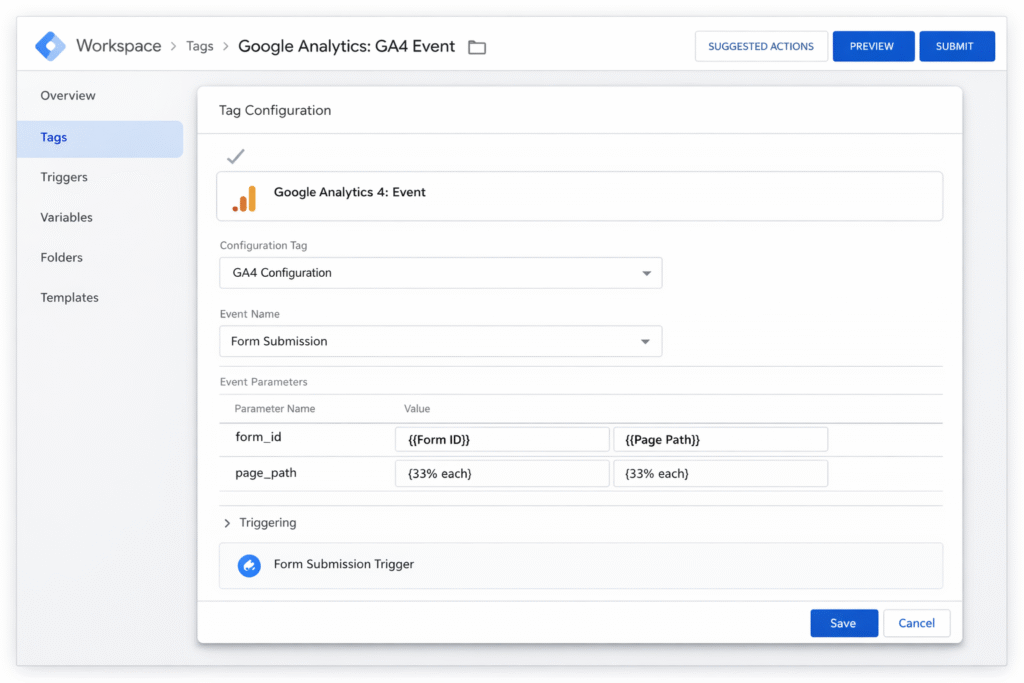
Setting up PPC tracking, while seemingly complex, can be broken down into straightforward steps. Proper implementation ensures that every campaign generates actionable insights.
1. Define Conversion Actions
The initial step involves identifying the most critical actions for a business, which serve as key indicators of success and inform the entire tracking strategy.
- Conversion Tracking by Industry:
- E-commerce: Track purchases, add-to-carts, and checkout initiations. Utilize enhanced e-commerce tracking for a comprehensive view of the conversion funnel. Additionally, track product views and abandoned carts to pinpoint potential drop-off points.
- SaaS: Monitor free trial sign-ups, demo requests, and feature usage. Beyond acquisition metrics, track activation events like onboarding completion or key feature adoption. Furthermore, measure retention metrics, such as users returning after a week or month.
- Content Businesses: Track resource downloads, video views (specifically, 75% or more completion), and newsletter sign-ups. Micro-conversions like article shares or time spent on page should be treated as signals of user intent. Measure repeat visits or multiple content interactions to identify qualified leads.
- Conversion Tracking by Goal Type:
- Lead Generation: Focus on form submissions, phone calls, and chat interactions. Use hidden fields to embed campaign data (e.g., source, keyword) directly into the CRM. Track partial form completions to identify and rectify points of friction.
- Brand Awareness: Track video views, social media engagements, and impressions. For campaigns prioritizing visibility, evaluate engagement rates and repeat interactions to gauge awareness growth.
- Customer Retention: Monitor loyalty program sign-ups, repeat purchases, and subscription renewals. Track engagement with email campaigns or retargeting ads aimed at existing customers.
2. Choose Tracking Methods
The choice of tracking method depends on required flexibility and available resources.
- Google Tag Manager (GTM): Offers high flexibility, particularly beneficial when direct developer access is limited.
- Direct Tag Implementation: Suitable for highly customized setups or when granular control over tag behavior is required.
- Server-Side Tracking: An advanced option for high-traffic websites or when handling sensitive data. It enhances tracking reliability by bypassing ad blockers.
3. Install Tracking Codes
This step is crucial for data collection.
- Install the base tracking code (e.g., Google Ads, Microsoft Ads) sitewide.
- Add conversion-specific event tags to key pages (e.g., thank-you, confirmation pages).
- Utilize GTM to configure triggers for specific user actions (e.g., button clicks, form submissions).
- Thoroughly test every tag before campaign launch to prevent data gaps.
4. Set Up Conversion Values
Assigning monetary values to conversions, even for non-revenue actions, is essential for meaningful reporting and prioritizing campaigns. For example, lead values can be calculated by multiplying the average customer lifetime value by the lead-to-customer close rate. This transforms data into actionable insights for improved decision-making.
5. Configure Attribution Settings
Selecting the appropriate attribution model in GA4 is vital for understanding each touchpoint’s contribution to conversions. Begin with a position-based model for balanced insights, transitioning to data-driven attribution once sufficient data (at least 3,000 clicks and 300 conversions per month) is accumulated. This approach effectively highlights successful strategies across the entire customer journey.
6. Test Tracking Implementation
Rigorous testing ensures the entire tracking setup functions correctly. Tools like Google Tag Assistant can verify tag firing and functionality. Analytics platforms should be checked to confirm accurate data capture, preventing errors that could lead to significant data loss and financial implications.
Best Practices to Keep in Mind
To ensure reliable and actionable PPC tracking, adhere to these proven best practices:
- Double-Check Tag Placement: Tags must be accurately placed on all relevant pages to capture precise data. Incorrect or missing tags result in incomplete reporting and skewed results.
- Standardize UTM Parameters: Implement consistent naming conventions for campaign tracking. This promotes data consistency, eliminates silos, and streamlines analysis.
- Enable Cross-Domain Tracking: For campaigns spanning multiple domains (e.g., e-commerce site with a separate checkout), ensure seamless tracking of user activity across all domains for a complete customer journey view.
- Stay Privacy Compliant: Adhere to data privacy regulations such as GDPR and CCPA to safeguard user data, maintain audience trust, and avoid costly fines and reputational damage.
Perfecting a tracking setup requires time and effort, but the investment yields substantial returns. The inability to measure performance directly hinders improvement; therefore, capturing all necessary data is paramount for enhancing campaign effectiveness.
Understanding Attribution Models
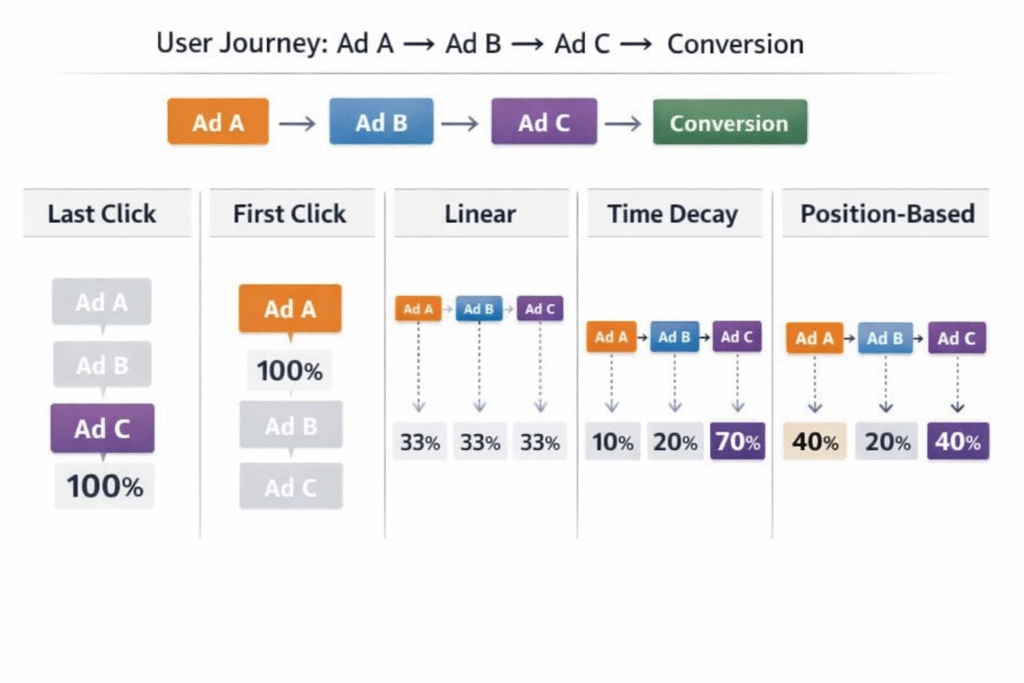
Attribution models are fundamental for comprehending how PPC campaigns drive results by defining how credit is assigned to different touchpoints within the customer journey.
- Last Click: This model allocates all credit to the final touchpoint preceding a conversion. It is suitable for products with short sales cycles and rapid decision-making processes.
- First Click: This model credits the initial touchpoint that introduced a user to the sales funnel. It is valuable for identifying top-performing prospecting campaigns and evaluating brand awareness efforts.
- Linear: Credit is distributed equally across all touchpoints in the conversion path. This model offers a balanced and straightforward view of campaign performance, ideal for those new to attribution modeling.
- Time Decay: This model assigns more credit to touchpoints closer in time to the conversion. It is particularly effective for businesses with longer sales cycles, such as B2B clients.
- Position-Based: This model allocates 40% of the credit to both the first and last interactions, distributing the remaining 20% across intermediate touchpoints. This is recommended for e-commerce clients as it balances the contributions of prospecting and closing efforts.
- Data-Driven: Utilizing Google’s artificial intelligence, this model analyzes specific conversion paths and assigns credit based on actual performance. It is the preferred model when sufficient data is available (minimum 3,000 clicks and 300 conversions per month).
The choice of attribution model should align with specific business goals and campaign strategies.
FAQs
- How do I track PPC campaigns?
- Begin by utilizing Google Analytics 4 and Google Tag Manager. Implement tracking codes across the website, establish conversion goals, and employ consistent UTM parameters for effective campaign performance tracking.
- Which attribution model is best for my business?
- Position-based attribution is an excellent starting point for campaigns involving both prospecting and retargeting. Once 300 monthly conversions are achieved, transitioning to data-driven attribution is recommended for deeper insights.
- Why are attribution models important?
- Attribution models are critical for accurately measuring success by correctly assigning credit to the various touchpoints in the customer journey. Without proper attribution, there is a significant risk of prematurely terminating profitable campaigns and overspending on underperforming ones.
Conclusion
PPC tracking is the critical differentiator between achieving profitable scaling and inefficiently wasting ad budgets. To effectively track ROI and optimize paid advertising, it is imperative to establish robust tracking fundamentals. This includes setting up accurate conversion tracking, defining clear goals, and selecting attribution models that are congruent with business objectives. Campaigns underpinned by strong tracking consistently outperform those lacking it. Accurate data empowers superior decision-making, while poor tracking invariably leads to wasted resources and missed opportunities. The decision to implement a comprehensive and effective tracking setup is fundamental for scaling campaigns successfully.