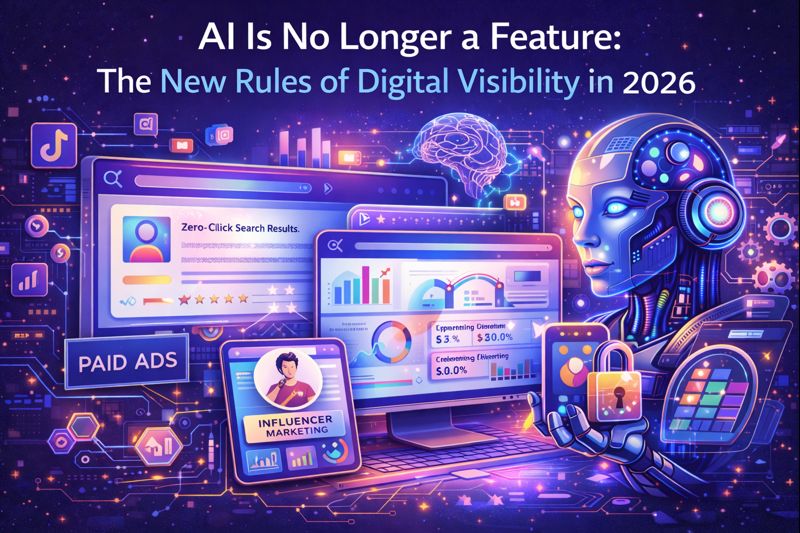
The digital marketing landscape, as observed 2026, unequivocally established Artificial Intelligence (AI) as the principal architect of online visibility, engagement, and trust. Historically regarded as an additive feature or a set of specialized tools within marketing operations, AI has now transitioned to become the intrinsic system that governs what digital content reaches its audience, what content is bypassed by users, and critically, what ultimately earns consumer trust. This profound shift indicates a complete re-architecting of how digital interactions are mediated and perceived.

One of the most salient developments stemming from AI’s ascendance is the intensification of “zero-click” behavior within search engine environments. This phenomenon describes instances where users’ informational needs are entirely fulfilled directly on the search results page, negating the requirement for them to click through to an external website. As AI models become more sophisticated in synthesizing and presenting information, the propensity for users to complete their search journey without visiting a brand’s owned media properties increases. This evolution has substantial implications for organic search strategies, demanding a focus on content optimization that serves immediate answers and establishes authority within the search interface itself.
Parallel to the changes in search, the domain of paid advertising has also experienced significant alterations. Specifically, the article highlights that paid ads have “lost prime real estate.” This suggests a reduction in the most prominent, high-visibility placements traditionally available for advertisers, or an increased competition for these spots, possibly due to algorithmic shifts prioritizing other content forms or user experience considerations. Marketers in this environment must re-evaluate their ad placement strategies and potentially explore alternative advertising models that are less reliant on traditional premium positions.
Moreover, the realm of influencer content has undergone a significant transformation, achieving full maturity as a “full-funnel channel.” This signifies that influencer collaborations are no longer confined to top-of-funnel awareness generation but are now effectively integrated across all stages of the customer journey, from initial discovery and consideration to conversion and post-purchase engagement. The maturity of this channel implies more sophisticated measurement, strategic planning, and integration with broader marketing objectives.
Finally, the various digital platforms themselves have adapted to these evolving dynamics by introducing new tools. The article notes that these additions occurred “quietly,” suggesting that while new functionalities are being rolled out, their deeper strategic implications or the underlying reasons for their introduction might not always be immediately apparent or widely publicized. These platform updates are likely responses to the pervasive influence of AI, changes in user behavior, and the expanding role of channels like influencer marketing, providing marketers with new mechanisms—or necessitating new approaches—to navigate the AI-driven landscape.The digital marketing landscape, as observed in December 2026, unequivocally established Artificial Intelligence (AI) as the principal architect of online visibility, engagement, and trust. Historically regarded as an additive feature or a set of specialized tools within marketing operations, AI has now transitioned to become the intrinsic system that governs what digital content reaches its audience, what content is bypassed by users, and critically, what ultimately earns consumer trust. This profound shift indicates a complete re-architecting of how digital interactions are mediated and perceived.
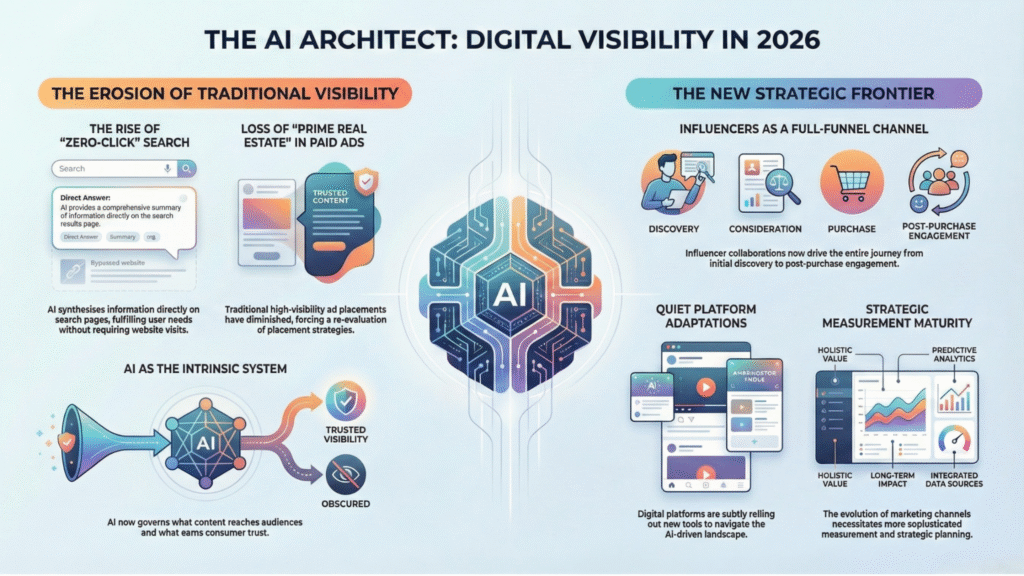
One of the most salient developments stemming from AI’s ascendance is the intensification of “zero-click” behavior within search engine environments. This phenomenon describes instances where users’ informational needs are entirely fulfilled directly on the search results page, negating the requirement for them to click through to an external website. As AI models become more sophisticated in synthesizing and presenting information, the propensity for users to complete their search journey without visiting a brand’s owned media properties increases. This evolution has substantial implications for organic search strategies, demanding a focus on content optimization that serves immediate answers and establishes authority within the search interface itself.
Parallel to the changes in search, the domain of paid advertising has also experienced significant alterations. Specifically, the article highlights that paid ads have “lost prime real estate.” This suggests a reduction in the most prominent, high-visibility placements traditionally available for advertisers, or an increased competition for these spots, possibly due to algorithmic shifts prioritizing other content forms or user experience considerations. Marketers in this environment must re-evaluate their ad placement strategies and potentially explore alternative advertising models that are less reliant on traditional premium positions.
Moreover, the realm of influencer content has undergone a significant transformation, achieving full maturity as a “full-funnel channel.” This signifies that influencer collaborations are no longer confined to top-of-funnel awareness generation but are now effectively integrated across all stages of the customer journey, from initial discovery and consideration to conversion and post-purchase engagement. The maturity of this channel implies more sophisticated measurement, strategic planning, and integration with broader marketing objectives.
Finally, the various digital platforms themselves have adapted to these evolving dynamics by introducing new tools. The article notes that these additions occurred “quietly,” suggesting that while new functionalities are being rolled out, their deeper strategic implications or the underlying reasons for their introduction might not always be immediately apparent or widely publicized. These platform updates are likely responses to the pervasive influence of AI, changes in user behavior, and the expanding role of channels like influencer marketing, providing marketers with new mechanisms—or necessitating new approaches—to navigate the AI-driven landscape.