The Silent Revolution: AI-Powered Functionality in Google’s SEO Tools
Google is currently implementing a strategic, yet understated, integration of Artificial Intelligence (AI) into its cornerstone SEO and analytics platforms: Google Search Console and Google Analytics. This deployment is characterized by its lack of fanfare, operating as a series of quiet upgrades that subtly enhance the core functionalities of these widely used tools. The primary objective of these AI integrations is not to introduce new, standalone AI products but to fundamentally improve how existing data is processed, presented, and understood by users.
Nature of AI Integration: Behind-the-Scenes Enhancements
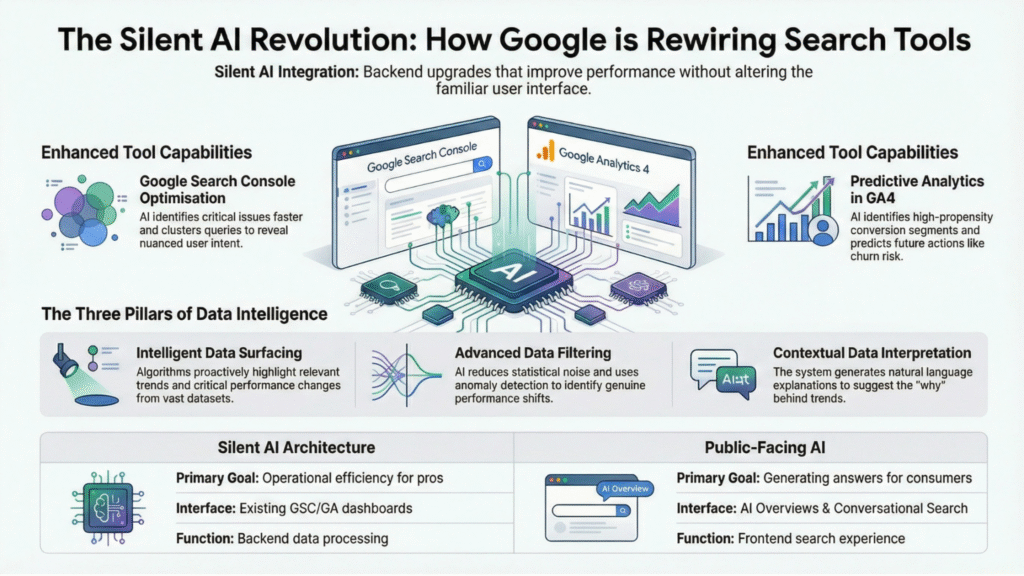
These AI-powered functionalities are designed to sit quietly within the platforms already familiar to millions of users. They operate behind the scenes, meaning they are not overtly marketed as new features with dedicated user interfaces. Instead, their impact is felt through improved performance and deeper insights generated from the data users are already accustomed to viewing. This approach ensures a seamless transition and integration into existing workflows for SEO professionals and digital marketers, minimizing the learning curve while maximizing the benefits. The emphasis is on augmenting the tools’ intelligence without disrupting user experience.
Key Platforms Affected: Google Search Console and Google Analytics

The primary platforms benefiting from these AI upgrades are Google Search Console (GSC) and Google Analytics (GA).
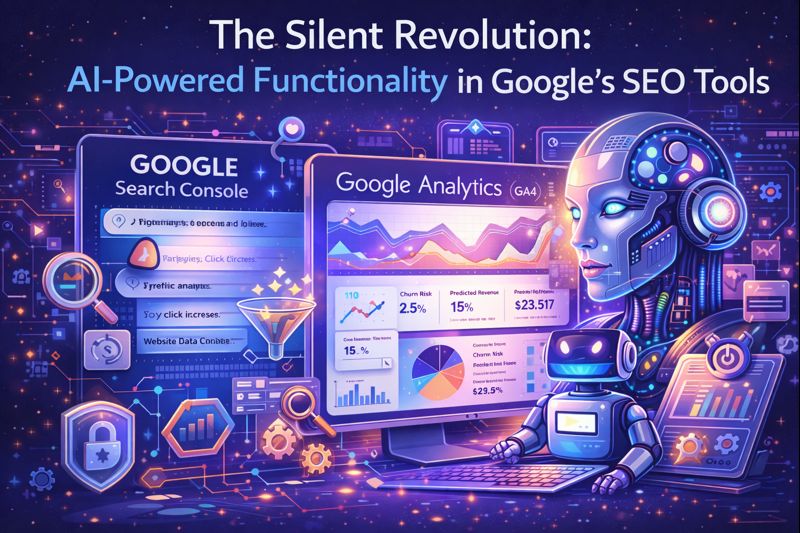
- Google Search Console: GSC is being enhanced to provide more refined insights into search performance, indexing status, and site health. The AI capabilities here likely focus on identifying critical issues faster, highlighting performance shifts with greater accuracy, and providing more intelligent recommendations for optimization. This could include smarter anomaly detection in performance reports, more precise identification of crawl budget inefficiencies, or AI-driven clustering of queries to reveal nuanced user intent.
- Google Analytics: In Google Analytics (particularly GA4), the AI integration extends to more sophisticated user behavior analysis, predictive capabilities, and automated insights generation. This might manifest as AI automatically surfacing significant changes in user engagement metrics, identifying high-propensity conversion segments, or providing predictive metrics about future user actions, such as churn risk or purchase likelihood, based on historical data patterns.
Core Functionality Enhancements: Data Surfacing, Filtering, and Interpretation
The central tenet of these AI upgrades is the transformation of how data is “surfaced, filtered, and interpreted”:
- Data Surfacing: AI algorithms are employed to intelligently bring to the forefront the most relevant and critical pieces of information from vast datasets. Instead of users having to manually sift through numerous reports, the AI proactively highlights key trends, performance changes, or actionable opportunities. For example, GSC might automatically flag a sudden drop in impression share for a critical keyword cluster, or GA might surface an unexpected spike in conversions from a particular geographic region, saving analysts time and ensuring crucial insights are not missed.
- Data Filtering: The “better data filtering” capability is a cornerstone of these advancements. AI-driven filters can go beyond traditional rule-based filtering by identifying complex patterns and correlations within data that human analysts might overlook. This includes:
- Anomaly Detection: Automatically identifying unusual spikes or drops in metrics, distinguishing genuine anomalies from routine fluctuations.
- Noise Reduction: Filtering out irrelevant data points or statistical noise to present a clearer picture of underlying performance.
- Smart Segmentation: Automatically creating or suggesting meaningful user segments based on behavioral patterns, enabling more targeted analysis and personalization efforts.
- Contextual Prioritization: Prioritizing data points based on their potential impact on overall SEO performance or business goals.
- Data Interpretation: AI assists in interpreting complex data relationships, providing not just the ‘what’ but also suggesting the ‘why’ and ‘what next.’ This can involve generating natural language explanations for data trends, offering prescriptive recommendations based on identified patterns, or even predicting future outcomes. For instance, an AI might interpret a decline in organic traffic by correlating it with recent site changes or algorithm updates, and then suggest potential corrective actions.
Distinction from Public-Facing AI: Not AI Overviews or Conversational Search
It is crucial to understand that these AI enhancements are distinctly separate from Google’s more consumer-facing AI initiatives, such as AI Overviews in search results or the broader advancements in conversational search capabilities. These internal AI upgrades are not about generating search answers or engaging in dialogue with users. Instead, they are analytical tools designed to improve the operational efficiency and strategic intelligence available to website owners, SEO practitioners, and digital marketers working within the Google ecosystem. They enhance the backend capabilities, providing better infrastructure for data analysis rather than altering the frontend search experience.